Marketing is a mountain of repeatable making wrapped around a few human calls: briefs, drafts, repurposing, the calendar, the publish. An AI-native content function puts the whole machine on a workforce that drafts on brand overnight, while every public post still waits for an editor's signature.
Installed in about 20 min. Governed and audited from the first run.
Every stage of the motion is worked by the right kind of worker (an unattended play, a team that faces your audience, a room of specialists), all reading and writing one shared record, with your editors at the gates that matter.
You don't wire this together or choose an architecture. You describe the outcome; the workforce brings the right kind of worker to each part of the motion, and they all work from one shared record, under one set of rules.
The repeatable plays (plan the calendar, draft from the brand KB, cut a blog into channel variants) run start to finish on their own, unattended, overnight.
Publishing and the channels are met by a team that faces your market: it schedules the post, pushes to each channel, and holds every public send for a person before anything goes live.
A campaign needs copy, design direction and channel cuts assembled together, so a room of specialists builds it in one pass, each owning its part, instead of a single writer serializing the lot.
You don't operate a dashboard. You talk to one coworker that runs the calendar, remembers your standing instructions, and surfaces only what needs you.
Every worker reads and writes the same briefs, assets and calendar, and every one obeys the same gates, budgets and audit. No worker is ever off the leash.
There's no integration project and no architecture to pick. You delegate the outcome, the workforce assembles the right workers, and every one of them lands under the same gates and audit.
Run the math: a writer turns out maybe two solid drafts a day, so a launch with a blog, three social cuts and a newsletter eats most of a week before anyone repurposes a thing. The workforce drafts the whole set overnight and hands your editors the judgment. The week shifts like this (a worked scenario, not a benchmark):
A brief that lands Monday morning has its draft, and its repurposed cuts, waiting before the standup. The bottleneck stops being a writer's week, so the calendar you planned is the calendar you ship.
Drafts are written from your brand knowledge base (voice guide, approved claims, positioning, past winners), retrieved and cited. A claim the KB doesn't back escalates to a person instead of shipping as confident-sounding copy.
Nothing publishes without the editor gate. Each approval is a single-use grant: one grant releases exactly one publish, and the next post asks again, so the brand voice at scale is still yours.
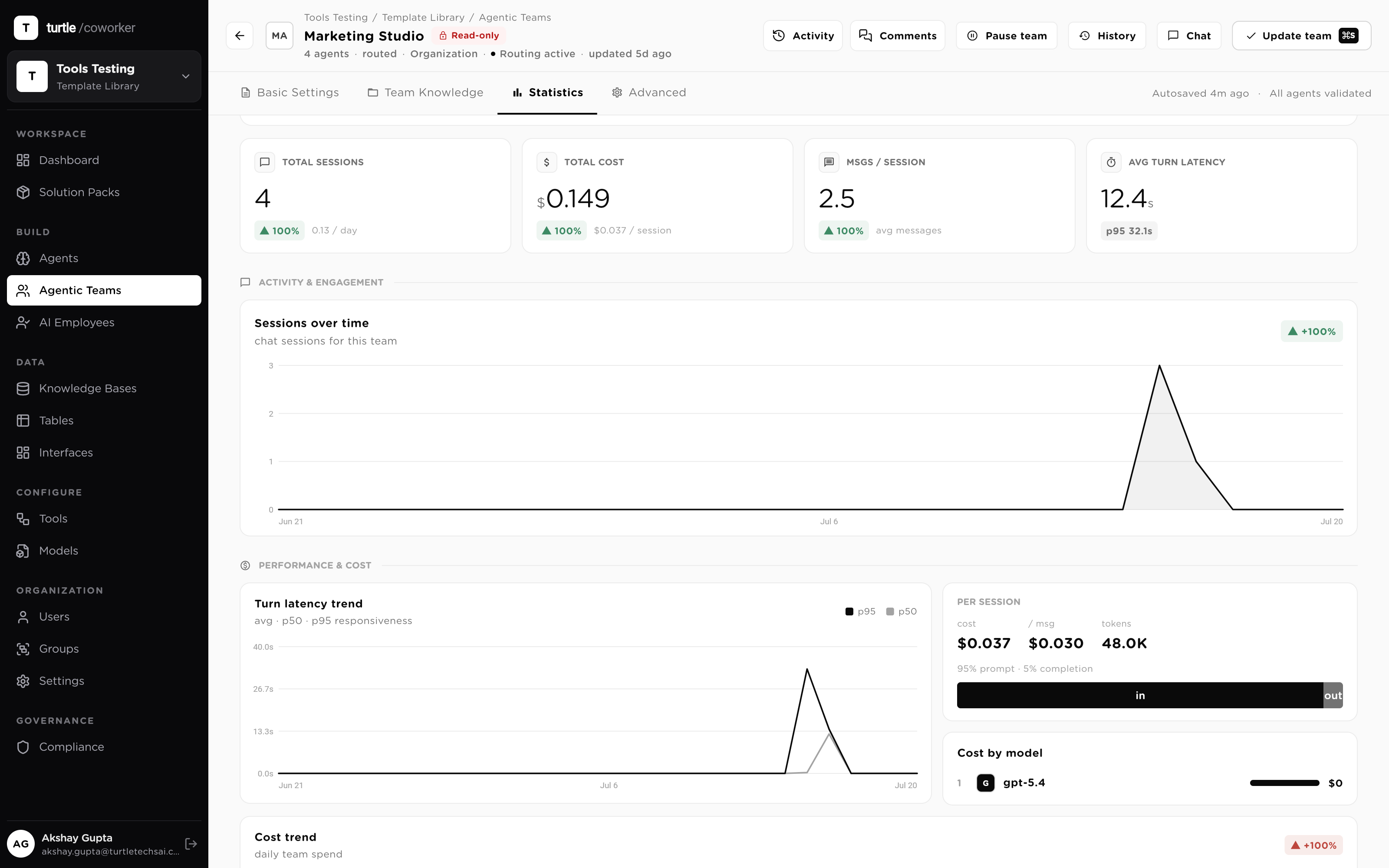
Every run's spend rolls up per asset, so what the launch post actually cost is a ledger entry under a budget with a hard cap, not an agency invoice mystery.
Marlow isn't a dashboard you operate, it's the coworker you delegate the calendar to. The overnight drafts arrive summarized with their citations, the publishes queue at your gate with the evidence attached, and each approval releases exactly one post.
Every message, tool call and approval in this exchange lands in the audit trail. How the gates work →
A scenario: a B2B software marketing team working a Thursday launch, with a blog, three social cuts and a newsletter due. These are real screens, not mockups.
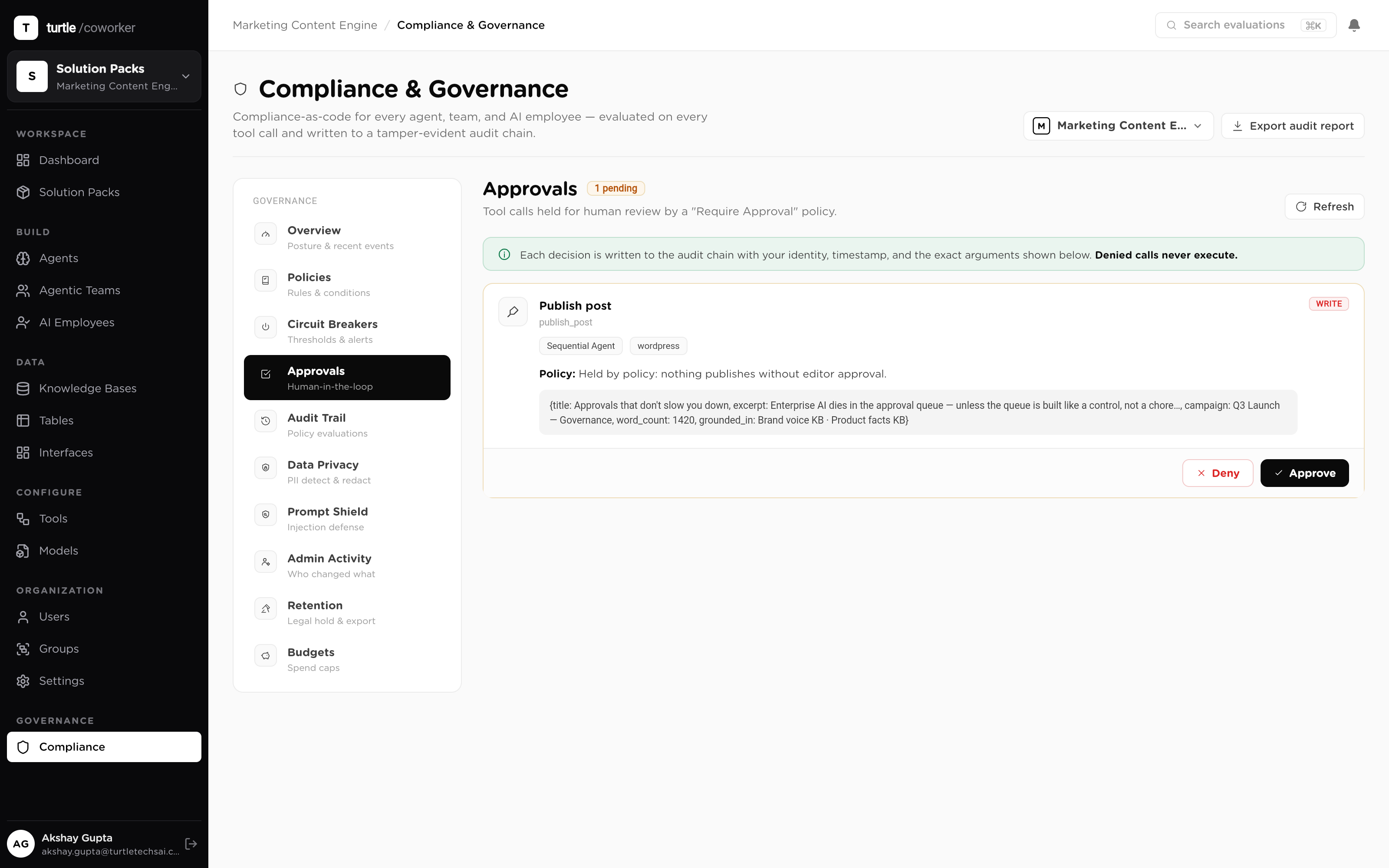
Every draft is written from your voice guide, positioning and approved-claims list, retrieved and cited, so an editor sees the grounding. A claim the KB doesn't back escalates to a human instead of shipping as copy. And inbound briefs and user-generated content are untrusted, so a prompt-injection shield screens them before they can steer a draft. The control plane →
Every public post stops at the editor gate, enforced at the tool call, at runtime, not by convention. Each approval is single-use: one grant releases exactly one publish, then the next post asks again. How approvals work →
Every brief, draft, approval and publish lands in the audit trail, pinned to the config version that ran, so who signed what is a lookup. And every run's spend rolls up per asset, under budgets with hard caps, so cost per asset is a number you read, not estimate.