Certificates, policy questions, first-notices, renewal chasing: CSR hours vanish into intake, renewals slip, and every improvised coverage answer is E&O exposure. An AI-native insurance function puts the whole desk on a workforce that runs it continuously, while anything that binds still waits for a licensed person.
Installed in about 20 min. Governed and audited from the first run.
Every stage of the desk is worked by the right kind of worker (an unattended play, a room of specialists for what binds), all reading and writing one shared record, with your licensed people at the gates that matter.
You don't wire this together or choose an architecture. You describe the outcome; the workforce brings the right kind of worker to each part of the desk, and they all work from one shared record, under one set of rules.
The repeatable desk work (triage every inbound request, answer from the policy documents, watch the renewal book) runs start to finish on its own, unattended, overnight.
Certificate requests and policy questions are met in the channel they arrive in by a team that answers from your documents, cites what it used, and escalates the second it isn't grounded.
When a claim or a binder needs coverage, policy language and money weighed together, a room of specialists assembles the decision, each owning its part, and holds it for a licensed person.
You don't operate a portal. You talk to one coworker that runs the desk, remembers your standing instructions and lead times, and surfaces only what needs a licensed eye.
Every worker reads and writes the same policies, renewals and claims, and every one obeys the same gates, budgets and audit. No worker is ever off the leash.
There's no integration project and no architecture to pick. You delegate the outcome, the workforce assembles the right workers, and every one of them lands under the same gates and audit.
Not a chatbot on the website: a workforce that owns the repeatable intake and hands your licensed people the judgment that's genuinely theirs. The week shifts like this (a worked scenario, not a benchmark):
Certificate requests, policy questions, claims first-notices, renewal queries: classified, matched to the client file and set in motion on arrival, not the morning after.
Coverage questions are answered from the actual policy documents in the knowledge base, retrieved and cited. What the documents don't cover escalates to a licensed person instead of being guessed. An invented coverage answer is a liability; the system is built so it can't happen.
Renewals live in a table with dates watched continuously. Each one is raised at your lead time with the client file attached, instead of discovered lapsed when the client calls.
Anything that binds coverage, commits the agency or moves money holds at the approval gate, one single-use grant per action. Your CSRs get their day back; your E&O exposure doesn't grow with your volume.
Cora isn't a portal you log into, it's the coworker you delegate the desk to. The evening's intake, the renewals that came due, the reply that needs a licensed eye: it arrives summarized, the pieces that need a licensed person are already queued with their citations, and each approval releases exactly one thing.
Every message, tool call and approval in this exchange lands in the audit trail. How the gates work →
A scenario: an independent agency whose inbox keeps filling after 5 PM. The feed is the story; the screens beside it are the real product surfaces that story runs on.
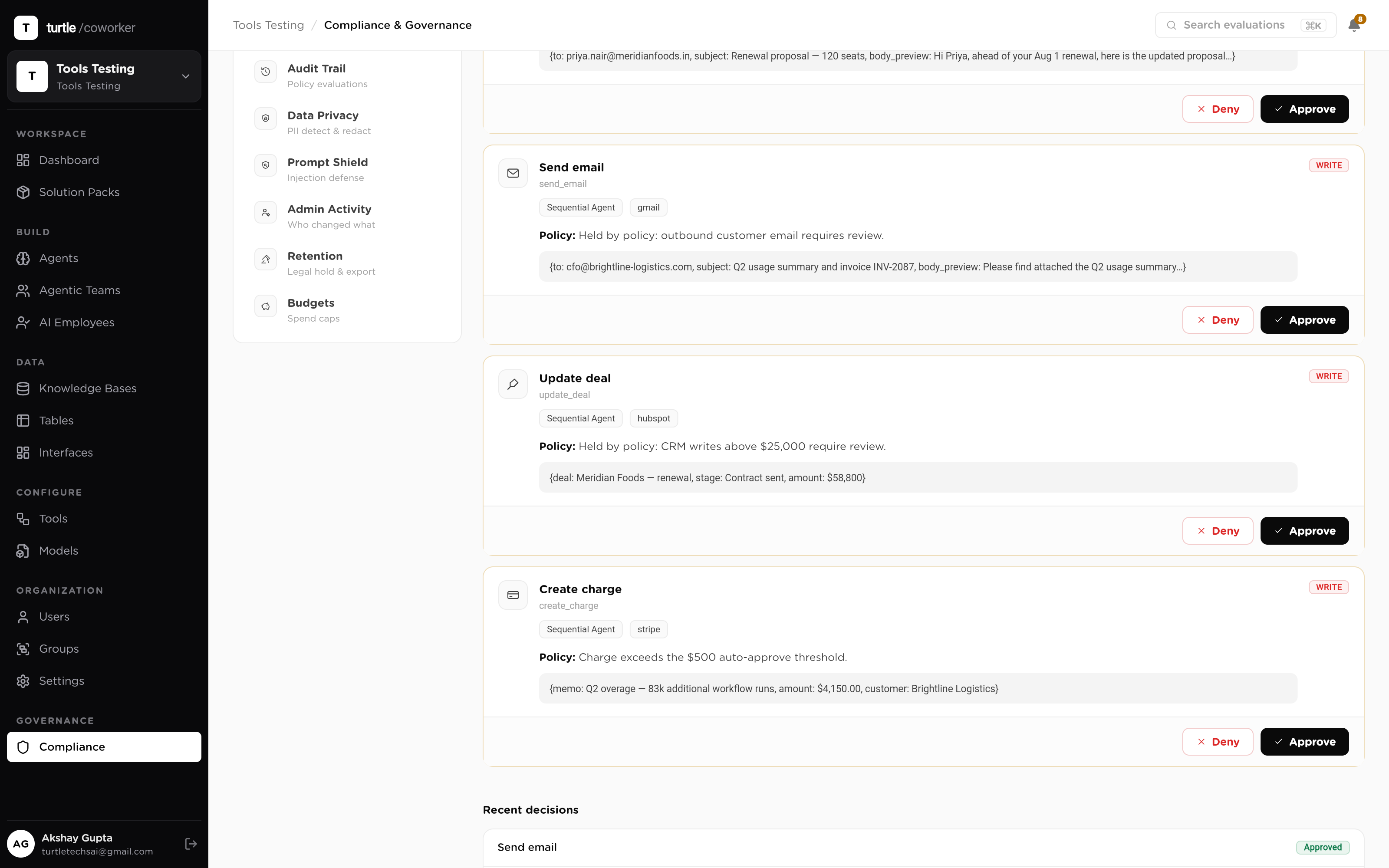
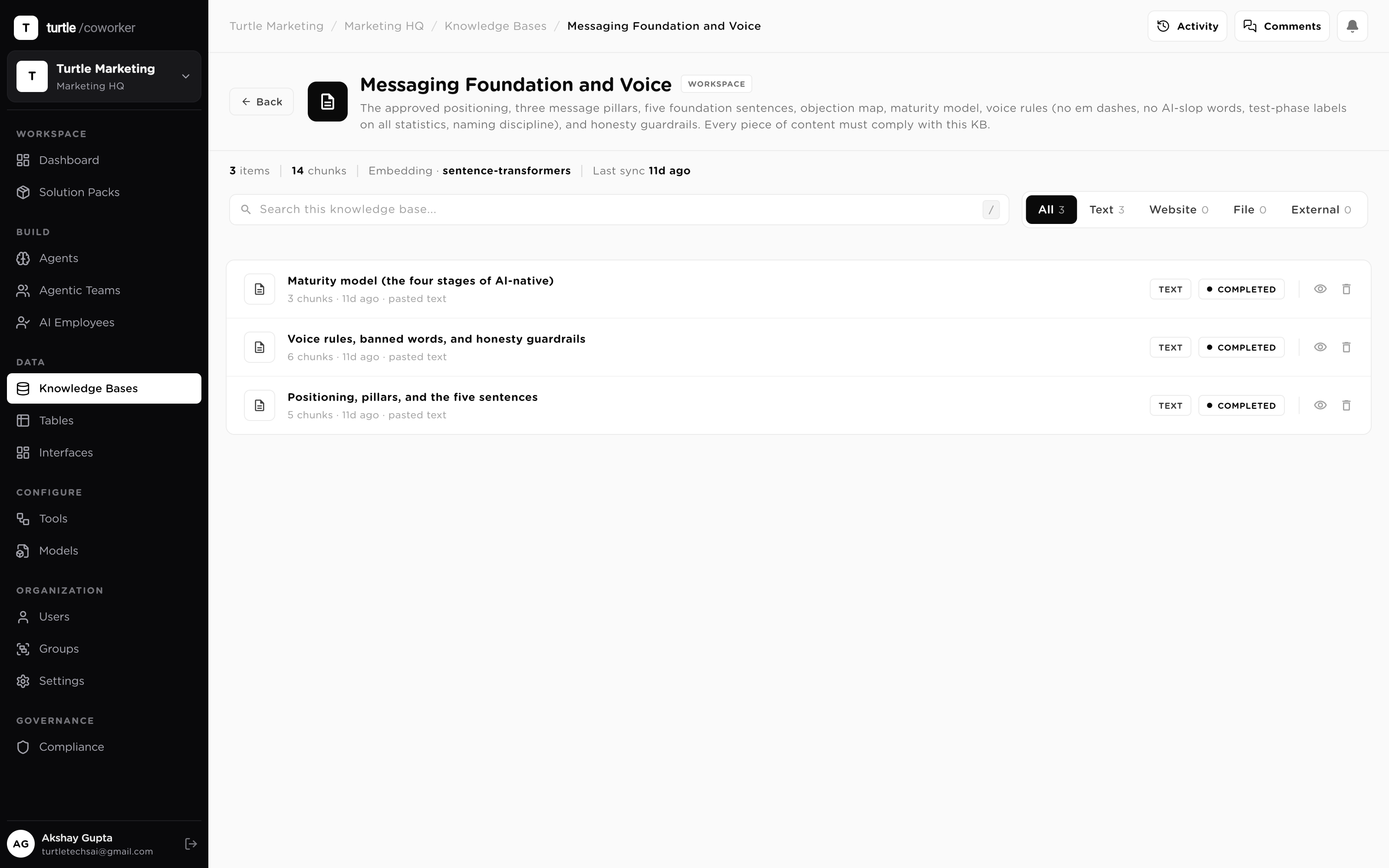
Coverage answers are retrieved from the policy documents in your knowledge base and cite what they used; what the documents don't cover escalates to a licensed person. Client email is untrusted input, so a prompt-injection shield screens it before it reaches a model. The control plane →
Anything that binds coverage, commits the agency or moves money stops at the approval gate, enforced at the tool call, at runtime. Each approval is single-use: one grant, one action, 24-hour expiry, then the next one asks again. How approvals work →
Every retrieval, draft, hold, approval and send lands in the audit trail, pinned to the config version that ran: who answered what, from which document, under which rules. Client PII sits under an explicit redaction policy, and access follows your org roles.